
Selling a Victorian in San Francisco: Renovation ROI and Staging Tips
A practical guide for owners selling a Victorian or Edwardian home in San Francisco. Learn which renovations deliver the strongest ROI, how to stage period homes for maximum impact, and what historic district rules mean for your sale.
San Francisco's Victorian and Edwardian homes are among the most recognizable residential architecture in America. The ornate trim work, bay windows, stained glass, and hand-carved millwork that define these homes create a level of character that modern construction simply cannot replicate. And in a market where single-family homes sold at a median of roughly $1.7 million in 2025, with 75% of transactions closing above asking price, that character translates directly into premium pricing.
But selling a Victorian is not the same as selling a modern home. The decisions you make about what to renovate, what to preserve, how to stage, and how to navigate historic district regulations will determine whether your home sells for a premium or sits on the market while buyers move on. In a city where the median days on market for single-family homes has dropped to just 13, the margin for error is slim.
This guide covers the practical considerations every Victorian homeowner should understand before listing: where renovation dollars deliver the strongest return, which original features to preserve rather than replace, how staging strategies differ for period homes, and what San Francisco's historic preservation rules mean for your sale preparation.
Understanding What Buyers Want in a Victorian
Before spending a dollar on renovations, you need to understand the buyer psychology that drives Victorian sales in San Francisco. The market data tells a clear story: buyers are paying top dollar, but only for homes that deliver the right combination of historic character and modern functionality.
In 2025, sellers received an average of 113.4% of their asking price on single-family homes across the city. But that number masks a significant gap between well-prepared homes and those that miss the mark. Turnkey properties, homes that are renovated, staged, and move-in ready, consistently outperform fixer-uppers by substantial margins. The buyers driving this market have strong incomes from tech and AI companies, they have the means to pay a premium, and they are unwilling to take on major renovation projects themselves.
What these buyers specifically want in a Victorian home breaks down into three categories:
Authentic period details that they cannot get in new construction: original millwork, stained glass panels, working fireplaces, wide-plank hardwood floors, decorative ceiling medallions, and ornamental facade elements. These features are the reason buyers seek out Victorians in the first place.
Modern systems and infrastructure that eliminate the anxiety of owning a 100-plus-year-old home: updated electrical panels, copper or PEX plumbing, seismic retrofitting, modern HVAC, and a kitchen and bathroom that function at contemporary standards.
A property that does not require immediate work. The ideal Victorian sale in 2026 is one where the buyer walks in, appreciates the crown molding and the period fireplace mantel, notes the updated kitchen with quartz counters and professional appliances, and makes an offer above asking because they see a home that honors its history while meeting their daily needs.
Renovation ROI: Where to Spend and Where to Stop
San Francisco's renovation costs are among the highest in the country. A whole-home renovation on a Victorian runs $60 to $150 per square foot depending on scope, structural requirements, and finish level. A luxury kitchen remodel costs $75,000 to $250,000. A primary bathroom renovation runs $30,000 to $100,000. At these price points, every dollar needs to be strategic.
The fundamental principle of renovation ROI in a Victorian is this: invest in systems and one or two high-impact rooms, and preserve authentic details rather than replacing them. National Cost vs. Value data consistently shows that midrange kitchen and bath projects recover a higher percentage of cost than ultra-luxury finishes. In practical terms, a $250,000 kitchen and primary bathroom renovation package may add $80,000 to $120,000 in resale value. That is not a positive return on the renovation alone. The return comes when you pair those upgrades with the home's existing character, which justifies the premium pricing that attracts multiple offers.
The Kitchen: Your Highest-Impact Room
The kitchen is where renovation dollars work hardest in a Victorian. Most period kitchens were designed for a different era of cooking and entertaining, with closed layouts, limited counter space, and appliance configurations that feel dated. Bringing the kitchen to modern standards while respecting the home's character is the single most effective thing you can do before listing.
What to invest in:
- Quality cabinetry that complements the home's period. Shaker-style cabinets in white or a warm neutral bridge the gap between historic and contemporary. Custom cabinetry that references Victorian proportions and molding profiles commands a premium.
- Stone countertops. Quartz or marble is the market expectation at this price point.
- Professional-grade appliances. A 36-inch range, panel-ready refrigerator, and integrated dishwasher signal quality without feeling out of place in a period home.
- Thoughtful lighting. Under-cabinet task lighting, pendant fixtures over an island or breakfast bar, and dimming capability create the warmth that buyers associate with well-renovated Victorians.
What to avoid:
- Opening up walls without structural assessment. Victorians are often balloon-framed, and what looks like a simple wall removal can require significant structural engineering. Budget $5,000 to $15,000 for structural consultation and reinforcement if you are modifying the floor plan.
- Ultra-contemporary finishes that clash with the home's character. Waterfall-edge islands, handleless cabinets, and industrial materials read as jarring in a Victorian context. The kitchen should feel updated, not transplanted from a different building.
The Primary Bathroom: The Second Highest Return
Buyers in the $1.5 million to $3 million range expect a primary bathroom that functions as a retreat. In a Victorian, this often means transforming a cramped, utilitarian space into something more generous.
What to invest in:
- Heated floors. In San Francisco's climate, this is a luxury that buyers notice and value, and the installation cost of $1,500 to $3,000 is modest relative to the impact.
- A walk-in shower with quality tile work. Large-format porcelain or marble tile with frameless glass enclosures reads as both modern and timeless.
- Updated vanity and fixtures. Brass and unlacquered brass hardware have become the default in high-end San Francisco renovations, and they complement Victorian aesthetics naturally.
What to avoid:
- Over-investing in materials beyond what the home's price point supports. A $100,000 bathroom in a home that will list at $1.5 million is overcapitalized. Target 3% to 5% of expected sale price for the bathroom budget.
Systems: The Invisible Investment That Sells Homes
Buyers in 2026 increasingly expect seismic and systems upgrades, and lenders are scrutinizing these items more closely. Addressing deferred maintenance on systems before listing removes objections and keeps the transaction on track.
Seismic retrofitting: Basic foundation bolting and cripple-wall bracing costs $5,000 to $20,000. Complex soft-story or hillside retrofits run $25,000 to $150,000 depending on scope. For a Victorian on a raised foundation, basic seismic work is one of the best investments you can make. It is unlikely to add dollar-for-dollar value on the appraisal, but it removes a significant concern that causes buyers to either lower their offers or walk away entirely.
Electrical panel upgrade: Many Victorians still have undersized panels or, in rare cases, remnants of knob-and-tube wiring. A 200-amp panel upgrade costs $2,000 to $5,000 and is often a prerequisite for the kitchen and bathroom work. If your home is in an area where permits filed after January 1, 2026 must comply with California's 2025 Building Energy Efficiency Standards, plan for electric-ready infrastructure including heat pump HVAC, induction cooking prewiring, and EV charger prewiring. Federal tax credits and TECH Clean California incentives can offset a meaningful portion of these costs.
Plumbing: Galvanized pipes should be replaced before listing. The cost of repiping a Victorian with copper or PEX varies from $8,000 to $20,000 depending on access and layout, but the alternative is a home inspection that flags aging plumbing and spooks the buyer.
What to Preserve: The Features That Command a Premium
The most expensive mistake you can make when preparing a Victorian for sale is removing or covering original features that buyers would pay a premium for. In San Francisco's market, authentic period details are not just aesthetic preferences; they are financial assets.
Never Remove or Replace
Original millwork and trim. Crown moldings, baseboards, door casings, and wainscoting in old-growth wood are irreplaceable at any reasonable cost. If they need refinishing, invest in that work. If sections are damaged, have them repaired by a woodworker who specializes in period restoration rather than ripping them out and replacing with modern profiles.
Stained glass and art glass. Original stained glass panels, transoms, and sidelights are among the most valued features in a Victorian. Even damaged panels can be restored by specialists for $500 to $2,000 per panel, a fraction of what they contribute to the home's value and appeal.
Decorative fireplace mantels. Even non-functional fireplaces with period mantels should be preserved and featured. The mantel and surround create a focal point that anchors the room's historic character.
Hardwood floors. Original heart pine, Douglas fir, or oak floors should be refinished, not replaced. The wide planks and patina of original flooring are a selling feature. Budget $3 to $8 per square foot for professional refinishing.
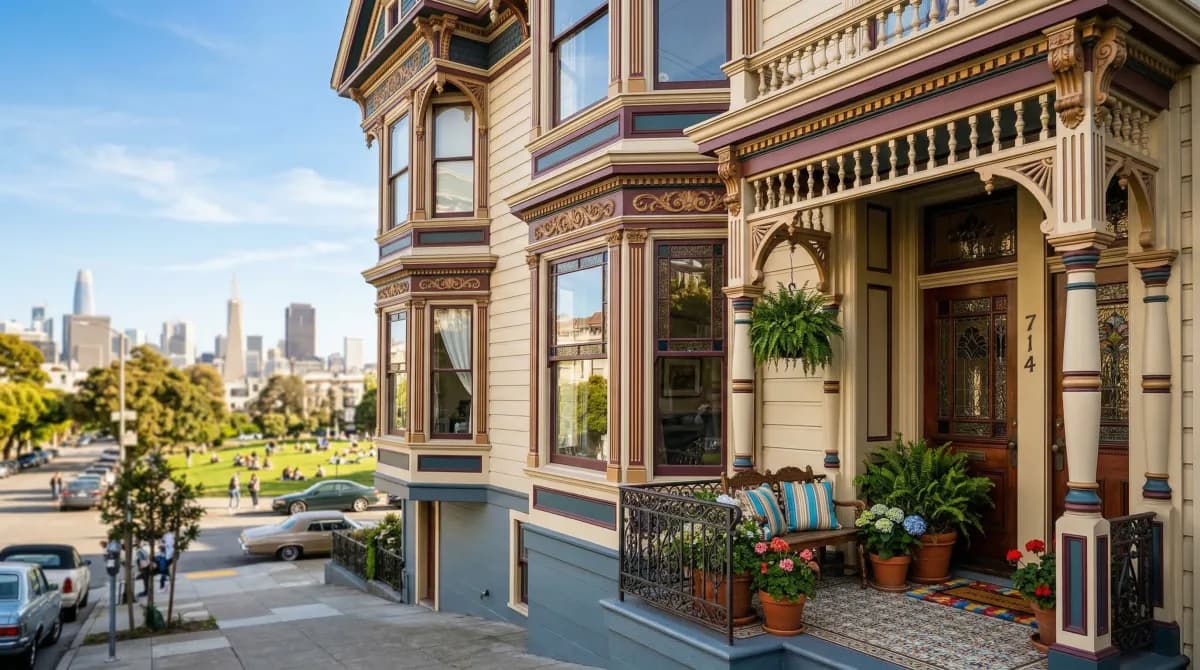
Exterior ornamental details. Cornice brackets, dentil molding, sunburst panels, and decorative shingling on the facade are what make Victorian homes visually distinctive. If your home has been "de-Victorianized" with aluminum siding or simplified trim at some point in its history, consider whether restoring original exterior details is cost-effective for your situation and price point.
Preserve With Updates
Windows. This is the most debated topic in Victorian renovation. Original double-hung wood windows with wavy glass have enormous character appeal, but they are often drafty and single-pane. In most cases, the best approach is to restore original windows and add discreet storm windows rather than replacing them with vinyl or aluminum units. If the windows are beyond repair, wood replacement windows that match the original profiles maintain character while improving performance. Note that in designated historic districts, window replacement requires permit review.
Light fixtures. Original gas-to-electric fixtures, crystal chandeliers, and period sconces should be rewired and preserved. Supplement with modern recessed lighting for task illumination, but keep the period fixtures as feature lighting.
Door hardware. Original crystal doorknobs, brass escutcheon plates, and mortise locks are worth preserving. Have them polished and functional rather than replacing with modern hardware.
Staging a Victorian: Strategy, Not Just Furniture
Professional staging delivers measurable returns in San Francisco. According to the National Association of Realtors, approximately 75% of sellers experience a 5% to 15% return on investment from staging, and staging can increase the sale price by up to 20% on average. In a city where the median single-family home sells for roughly $1.7 million, even a 5% staging premium translates to $85,000.
But staging a Victorian requires a different approach than staging a modern home. The spaces are different, the proportions are different, and the buyer expectations are different.
Work With the Architecture, Not Against It
Victorian rooms tend to have higher ceilings, narrower proportions, and more defined boundaries than modern open-plan homes. Staging should emphasize these qualities rather than fighting them.
Scale furniture to the room. Victorian rooms with 10-foot or 12-foot ceilings need taller furniture pieces, higher-mounted art, and vertical elements that draw the eye upward. Low-slung contemporary furniture will make the room feel empty and cold.
Use warm, layered color palettes. Victorians respond well to richer tones than the all-white staging that works in modern homes. Think warm grays, deep blues, forest greens, and cream tones that reference the period without feeling costume-like. The goal is to create spaces that feel "of the house" rather than generically attractive.
Highlight architectural features with lighting. Position table lamps, floor lamps, and accent lighting to draw attention to fireplace mantels, bay window alcoves, built-in bookcases, and ceiling details. Good lighting is the single most underrated staging tool in a Victorian, where overhead fixtures alone often leave the richest details in shadow.
Declutter Without Stripping Character
The staging principle of "less is more" applies to Victorians, but with an important caveat: these homes are not meant to feel minimalist. A Victorian staged to look like a Scandinavian loft will confuse buyers. The right approach is to remove personal clutter and excess furniture while retaining enough warmth and detail that the home feels lived-in and inviting.
Books on shelves. A curated selection of books in a built-in bookcase or mantel shelf adds warmth that an empty shelf cannot.
Art that references the period. Framed botanical prints, landscape paintings, or photography in frames that complement the home's era adds sophistication without feeling dated.
Textiles with texture. Layered rugs, throw pillows in rich fabrics, and window treatments that frame rather than hide the windows create the sense of comfort that Victorian buyers seek.
Do Not Forget the Exterior
Curb appeal is critical for Victorians because the facade is the first thing that communicates the home's character and condition. In a city where many buyers drive by a property before deciding whether to attend an open house, the exterior does heavy lifting.
Paint. If your Victorian's exterior paint is fading, peeling, or in colors that do not complement the architecture, a fresh exterior paint job is one of the highest-impact investments you can make. San Francisco has a rich tradition of polychromatic Victorian color schemes, and a well-chosen palette that highlights trim details, window frames, and ornamental elements signals quality and care. Budget $15,000 to $40,000 for a full exterior repaint depending on the home's size and detail level.
Landscaping. Even a small Victorian front garden can be transformed with fresh plantings, a clean pathway, and well-maintained hardscaping. Potted plants on the front steps are a low-cost detail that photographs well.
Front door and hardware. A freshly refinished or painted front door with quality hardware creates the critical first impression as buyers approach. This is a $500 to $2,000 investment that punches well above its cost.
Historic District Considerations
San Francisco has multiple layers of historic designation that can affect what you can and cannot do when preparing your Victorian for sale. Understanding these rules before you start work is essential; retroactive compliance is far more expensive and stressful than planning ahead.
How Historic Designation Works in San Francisco
San Francisco's historic protection is administered by the Planning Department and the Historic Preservation Commission. There are several levels of designation:
Designated landmarks and historic districts under Article 10 of the Planning Code provide the strongest protection. The Alamo Square, Liberty Hill, and Dogpatch historic districts are examples. In these areas, any exterior change visible from a public way requires a Certificate of Appropriateness. That includes paint colors, window replacements, roof materials, additions, and even significant landscaping changes.
Conservation districts under Article 11 provide a lighter level of protection, primarily focused on demolition controls and significant alterations. Many downtown and South of Market buildings fall under this designation.
Properties listed on the National Register of Historic Places receive federal recognition and may qualify for certain tax incentives, but the National Register listing does not restrict what private owners can do unless federal funding or permits are involved.
Properties identified in historic resource surveys may not have formal designation but are flagged for review if demolition or significant alteration is proposed. San Francisco's planning system treats these properties as potential historic resources under CEQA (California Environmental Quality Act) review.
What This Means for Sellers
If your Victorian is in a designated historic district, plan your timeline accordingly. Permit review for exterior changes in Article 10 districts adds time to the process, typically 4 to 12 weeks depending on the scope of work and the commission's calendar. Window replacements, exterior paint, facade restoration, and additions all require review.
The practical implication is that you should start the permit process early if your pre-sale preparation includes any exterior work. Interior renovations are generally not subject to historic review unless they involve changes visible from the exterior (like altering window openings) or structural modifications that could affect the building's historic integrity.
The Mills Act Advantage
If your Victorian is in a designated historic district and you have not yet applied for the Mills Act, consider doing so before listing. The Mills Act provides property tax reductions in exchange for a commitment to maintain the property's historic character. For buyers, inheriting a Mills Act contract means significantly lower annual property tax bills, which is a tangible financial incentive that can make your listing more attractive.
The Mills Act contract runs with the property, so a buyer who purchases your Victorian assumes the obligation and the tax benefit. In a market where property tax bills on a $2 million home can exceed $20,000 annually, the Mills Act savings can be meaningful enough to influence a buyer's willingness to pay a premium.
Pricing Strategy for Victorians
The pricing dynamics for Victorians in San Francisco follow the broader market pattern outlined in our Q1 2026 market report: strategic underpricing to generate multiple offers outperforms aspirational overpricing. This is especially true in Victorian-heavy neighborhoods like Noe Valley, the Haight, Alamo Square, and Pacific Heights where buyers have strong comparables to reference.
Price to the renovated comps, not the assessed value. If comparable renovated Victorians in your neighborhood have sold for $2.2 million, pricing at $1.895 million will generate the kind of traffic that leads to offers at or above the comp level. Pricing at $2.3 million to "see what happens" will result in a stale listing and eventual price reductions.
Highlight the renovation investment in marketing materials. Buyers want to know what has been updated. A pre-listing disclosure package that itemizes recent renovations, systems upgrades, permit documentation, and seismic certifications removes uncertainty and increases buyer confidence. This is especially important for Victorian-specific work like foundation bolting, electrical upgrades, and plumbing replacement that buyers cannot see but care deeply about.
Time the listing for maximum impact. San Francisco's spring market, roughly March through May, consistently produces the strongest results for single-family homes. Listing a freshly staged Victorian in April with professional photography that captures the architecture in good light is a formula that works.
Bringing It All Together
Selling a Victorian in San Francisco in 2026 comes down to a straightforward principle: invest strategically in what matters, preserve what makes the home special, and present the result in a way that lets buyers see both the character and the functionality.
The homes that achieve the highest prices share common traits. Their kitchens and bathrooms have been updated to modern standards. Their original millwork, stained glass, and hardwood floors have been preserved and showcased. Their systems have been addressed so that inspections go smoothly. And they are staged by professionals who understand that a Victorian is not a blank canvas but a home with an existing personality that needs to be amplified, not overwritten.
For a full walkthrough of the selling process, visit our seller's guide. If you are preparing to sell a Victorian or Edwardian home in San Francisco and want a tailored strategy that accounts for your home's specific character, condition, and neighborhood dynamics, The Goodrich Group brings deep experience in marketing San Francisco's most distinctive homes. Reach out to our team for a confidential consultation on positioning your Victorian for the strongest possible result.
Disclaimer: The Goodrich Group and Arthur Goodrich operate as independent real estate professionals. We are not affiliated with, sponsored by, or authorized representatives of any of the developers, resorts, hotels, or entities that may be mentioned in this blog. All information provided is for informational purposes only and is based on publicly available sources, including planning documents, news reports, and other materials in the public domain. While we strive for accuracy, we cannot guarantee that all details are current or complete. Any errors brought to our attention will be promptly reviewed and corrected as appropriate.