
San Francisco Rent Control Explained: What Property Owners Must Know
A practical guide to San Francisco rent control for landlords and investors. Covers the Rent Ordinance, exempt properties, the 1.6% allowable increase for 2026-2027, Costa-Hawkins, eviction rules, and compliance strategies.
San Francisco's rent control system is among the most complex in the nation. For property owners and real estate investors, understanding exactly which rules apply to your property, what increases are permitted, and how eviction protections shape your management strategy is not optional. It is the foundation of sound rental property ownership in this city.
This guide covers the practical details that landlords, investors, and prospective property buyers need to know about San Francisco's rent control framework in 2026, including the current allowable rent increase, property exemptions, state and local law interactions, and the compliance requirements that protect both your investment and your tenants.
The San Francisco Rent Ordinance: What It Covers
San Francisco's Rent Ordinance, first enacted in 1979 and administered by the San Francisco Rent Board, governs rent increases and eviction procedures for most residential rental units in the city. If your property falls under the Rent Ordinance, you are subject to annual rent increase limits, just cause eviction requirements, and specific notice and licensing obligations.
Which Properties Are Covered
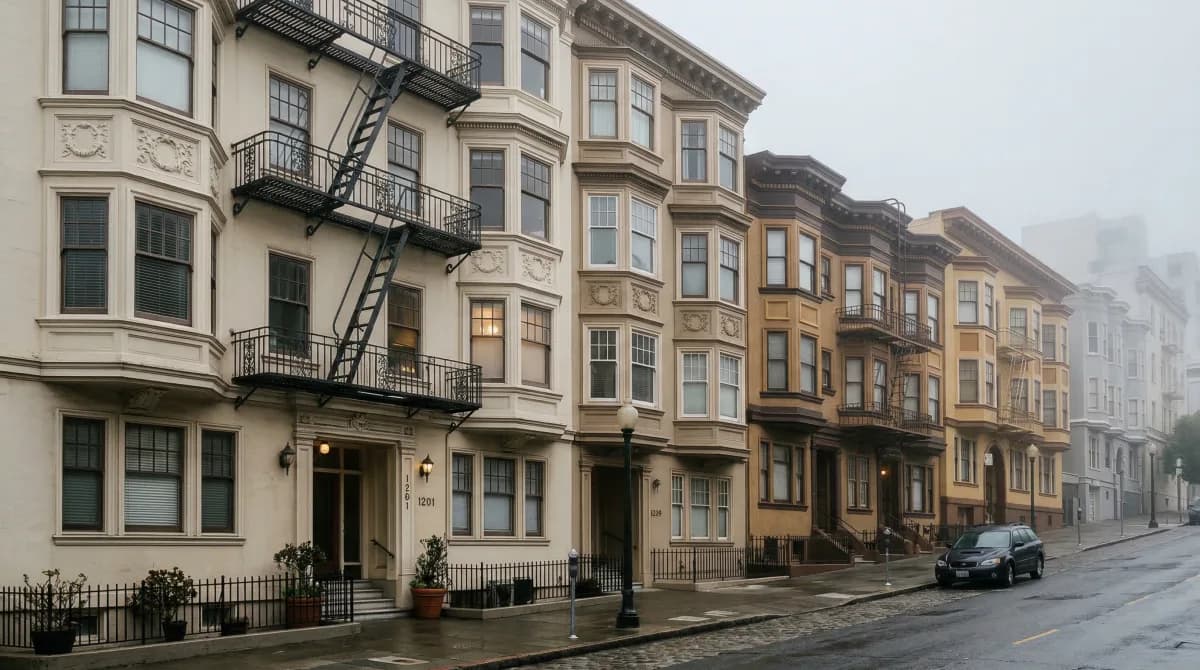
The Rent Ordinance applies to most residential rental units in buildings with two or more units that were built (or received a certificate of occupancy) before June 13, 1979. This includes apartments, flats in multi-unit buildings, and many residential hotels.
The critical date is June 13, 1979. If your building's certificate of occupancy predates that, the units are almost certainly subject to rent control unless a specific exemption applies.
Which Properties Are Exempt
Several categories of properties fall outside the Rent Ordinance:
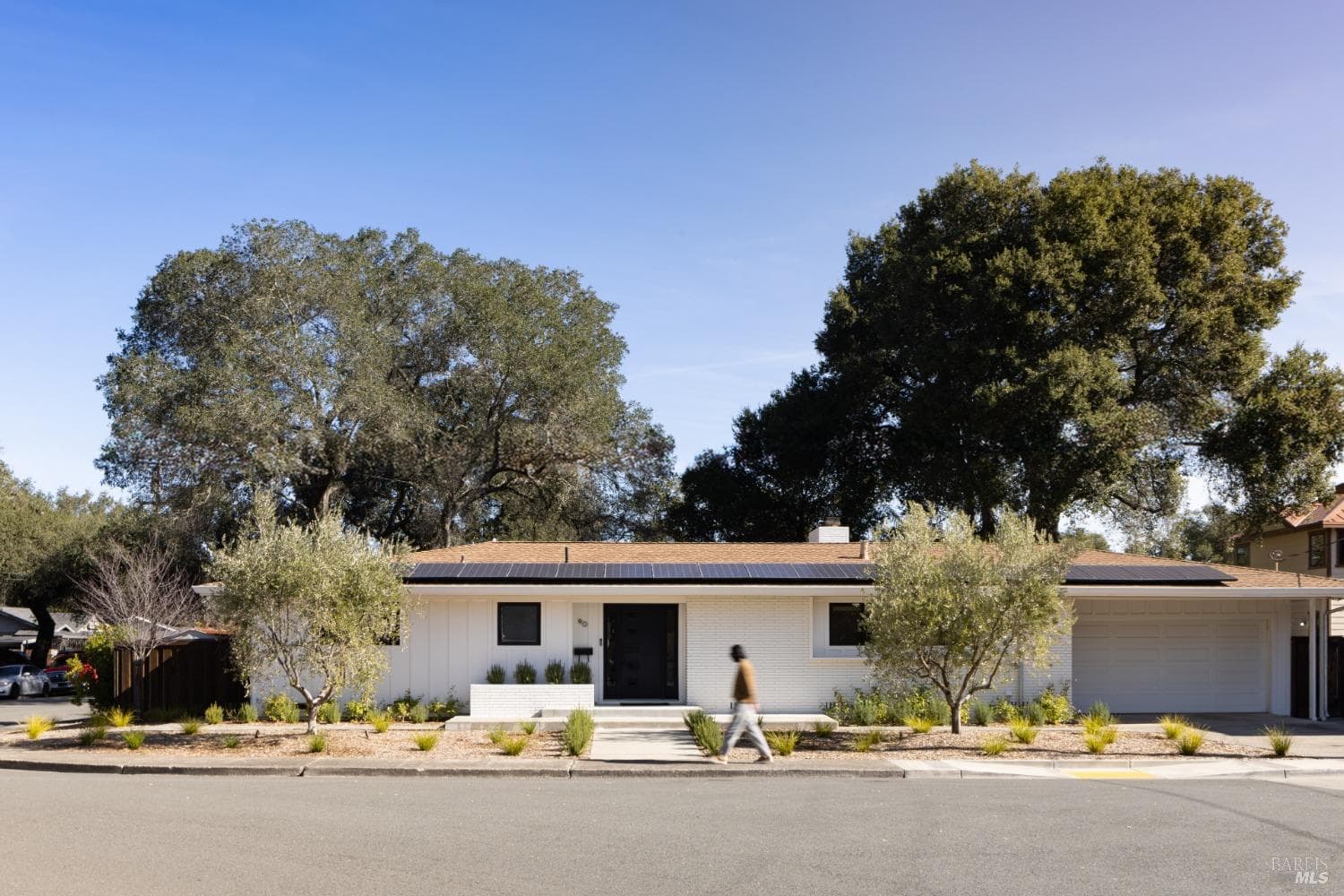
- Single-family homes and condominiums: These are generally exempt from SF rent control under the Costa-Hawkins Rental Housing Act, though they may still be subject to state rent caps under AB 1482
- Buildings constructed after June 13, 1979: Newer construction is exempt from local rent control
- Owner-occupied buildings with fewer than three units: If you live in one unit of a two-unit building, the other unit may be exempt
- Subsidized housing: Units with government subsidies may have separate regulatory frameworks
- Certain non-profit cooperative housing: Some cooperatives fall outside the Ordinance
Determining your property's status is the first step in any rental management strategy. The San Francisco Rent Board maintains records and can help verify whether a specific address falls under rent control. When purchasing an investment property, always confirm the Rent Ordinance status during due diligence.
The 2026-2027 Allowable Rent Increase: 1.6%
Effective March 1, 2026 through February 28, 2027, the San Francisco Rent Board has set the allowable annual rent increase at 1.6%. This percentage is calculated based on 60% of the increase in the Consumer Price Index for All Urban Consumers in the San Francisco Bay Area.
For context, the 2025-2026 allowable increase was 1.4%. Recent annual increases have been modest:
| Period | Allowable Increase |
|---|---|
| March 2026 -- February 2027 | 1.6% |
| March 2025 -- February 2026 | 1.4% |
| March 2024 -- February 2025 | 1.7% |
| March 2023 -- February 2024 | 3.6% |
How to Calculate the Increase
Multiply the tenant's base rent by the allowable percentage. For example:
- Base rent of $3,000 multiplied by 0.016 equals $48
- New base rent: $3,048
The increase must be calculated on the tenant's base rent only, which includes housing services like parking or storage if they are part of the rental agreement. It does not include temporary passthroughs or fluctuating charges. Rent increases cannot be rounded up to the nearest dollar.
Timing and Anniversary Dates
A landlord can impose the first annual increase 12 months after the tenant's lease began. Once you increase rent, that date becomes the tenant's "anniversary date," and you must wait at least 12 full months before the next increase.
If you increase rent later than the anniversary date, the effective date of the increase becomes the new anniversary date. This matters because changing the anniversary date can result in losing a year's worth of banked increases.
Banked Increases
If you do not increase rent on a tenant's anniversary date, you can "bank" that year's allowable increase and apply it later, combined with the current year's increase. However, there are specific rules:
- A banked increase must have been fully available for at least 12 months before it can be applied
- The total increase (banked plus current) cannot exceed 10% without providing 90-day notice
- Shifting the anniversary date can permanently forfeit a banked increase if 12 full months have not elapsed since it first became available
Example: A tenant moved in on June 1, 2023 at $1,000 per month. The landlord wants to increase rent for the first time on June 1, 2026. The banked increases from June 2024 (1.7%) and June 2025 (1.4%) total 3.1%. Combined with the current 1.6% increase, the total allowable increase is 4.7%, bringing rent to $1,047.
Many experienced landlords impose annual increases on the same date each year to avoid anniversary date complications.
Rent Increase License Requirement
Since July 2022 (or March 2023 for condominiums and buildings with one to nine units), landlords must obtain a rent increase license before imposing any annual or banked rent increases. To get this license, you must first report your property into the Rent Board Housing Inventory. Imposing an increase without a valid license violates the Rent Ordinance.
Proper Notice Requirements
A landlord must give tenants:
- 30-day written notice for increases of 10% or less
- 90-day written notice if the increase exceeds 10% (either alone or combined with another increase in the same year)
- If the notice is mailed, add five additional days
The notice must include the dollar amount, percentage amount, and effective date of the increase. Use the percentage that will be in effect on the date of the increase, not the percentage in effect when you serve the notice.
State Law: AB 1482 and the Tenant Protection Act
Even if your property is exempt from San Francisco's Rent Ordinance, it may still be subject to California's statewide rent cap under the Tenant Protection Act of 2019 (AB 1482).
What AB 1482 Covers
AB 1482 limits annual rent increases to 5% plus the local Consumer Price Index (CPI), but never more than 10% total in any 12-month period. For properties in San Francisco that fall under AB 1482 but not the local Rent Ordinance, the maximum increase is currently 6.3% through July 31, 2026.
AB 1482 also imposes just cause eviction requirements on covered properties.
AB 1482 Exemptions
The following properties are exempt from AB 1482:
- New construction: Buildings with a certificate of occupancy issued within the last 15 years
- Owner-occupied duplexes: Where the owner lives in one of two units (the owner must provide written notice of exemption)
- Single-family homes and condos owned by individuals (not corporations, LLCs, or REITs) when the owner provides written notice of exemption
- Properties already covered by a local rent control ordinance that is more restrictive than AB 1482 (San Francisco's Rent Ordinance generally satisfies this)
The Overlap in Practice
For San Francisco property owners, the practical landscape looks like this:
- Pre-1979 multi-unit buildings: Covered by the SF Rent Ordinance (1.6% cap)
- Post-1979 buildings not exempt from AB 1482: Covered by the state Tenant Protection Act (5% + CPI cap)
- Newer buildings (less than 15 years old): Potentially exempt from both local and state rent caps, though just cause eviction rules may still apply
- Single-family homes: Exempt from SF rent control, potentially exempt from AB 1482 if individually owned and owner provides written notice
Understanding which framework applies to your specific property is essential before implementing any rent increase.
Costa-Hawkins: The State Framework That Limits Local Control
The Costa-Hawkins Rental Housing Act, enacted in 1995, is the state law that shapes what cities like San Francisco can and cannot regulate. Understanding Costa-Hawkins is critical for investors evaluating rental properties.
Key Provisions
Vacancy decontrol: This is the most significant provision for landlords. When a tenant in a rent-controlled unit voluntarily vacates or is lawfully evicted, the landlord can reset the rent to market rate for the next tenant. There is no limit on how much rent a landlord may charge when initially renting a vacant unit, even if the unit is subject to rent control.
This means that while annual increases are capped at 1.6% for existing tenants, turnover allows landlords to capture market-rate rents on the next lease.
Exemption of single-family homes and condos: Costa-Hawkins prevents cities from imposing rent control on single-family homes and condominiums, as well as on units built after February 1, 1995 (or whatever date the local rent control ordinance was enacted, whichever is later).
Protection of new construction: Units constructed after 1995 cannot be subjected to local rent control, which is designed to encourage new housing development.
Proposition 33: The Attempt to Repeal Costa-Hawkins
In November 2024, Proposition 33 appeared on the statewide ballot with the goal of repealing Costa-Hawkins and allowing cities to extend rent control to newer buildings and single-family homes. The measure failed decisively, with over 60% of voters rejecting it. As a result, Costa-Hawkins remains intact, and vacancy decontrol continues to be available to landlords.
For investors, this means the fundamental economic model of San Francisco rental property investment remains unchanged: rent-controlled units generate modest annual increases from existing tenants, but turnover provides the opportunity to reset rents to current market levels.
Eviction Rules and Just Cause Requirements
San Francisco's eviction protections are among the strongest in the country. Landlords can only evict tenants for legally specified reasons, divided into "at-fault" and "no-fault" categories.
At-Fault Evictions
These require that the tenant has done something wrong:
- Nonpayment of rent: The tenant has failed to pay rent after receiving proper notice
- Breach of lease: The tenant has violated a material term of the lease agreement
- Nuisance: The tenant is causing substantial interference with the comfort and safety of other tenants
- Illegal use: The tenant is using the unit for illegal purposes
No-Fault Evictions
These do not involve tenant wrongdoing but require specific procedures and, in most cases, relocation payments:
- Owner move-in (OMI): The landlord or a qualifying relative intends to occupy the unit as their primary residence. Strict requirements apply, including that the landlord must actually live in the unit for at least 36 months
- Ellis Act withdrawal: The landlord removes all units in the building from the rental market permanently. Extended notice periods apply (120 days for most tenants, one year for seniors 62+ and disabled individuals)
- Capital improvement: The unit must be temporarily vacated for substantial renovation. Tenants have the right to return at the same rent after work is completed
- Demolition: Requires permits and tenant relocation assistance
Relocation Payments
For no-fault evictions, landlords must compensate tenants. Ellis Act evictions require relocation payments of up to $10,000 per tenant or $30,000 per household, depending on tenant income and family composition. OMI evictions also require relocation assistance, and the amounts are updated periodically by the Rent Board.
Tenant Buyout Agreements
When landlords negotiate voluntary move-outs with tenants, all buyout agreements must be filed with the Rent Board. Tenants have the right to consult legal counsel and may rescind agreements within 45 days of signing. Transparency and proper documentation are mandatory.
New Laws for 2026 That Affect Property Owners
Several new California laws took effect in 2026 that directly impact San Francisco rental property owners.
Appliance Requirements (AB 628)
All rental units in California must now include a working stove and refrigerator. These are now part of the state's habitability standards, and property owners are responsible for repairs and replacements.
Social Security Tenant Protection Act (AB 246)
Tenants who rely on Social Security payments are protected from eviction if funds are frozen due to federal government action or inaction. Landlords cannot pursue eviction for nonpayment if the tenant's Social Security deposit was delayed through no fault of their own.
Security Deposit Reforms (AB 414)
Landlords are now required to return security deposits electronically when a tenant requests that method. The law also permits both parties to agree on alternative return arrangements, such as applying the deposit to the final month's rent. In shared housing situations, each renter must receive their security deposit refund separately.
Security deposits remain capped at the equivalent of one month's rent for many properties, and before-and-after photographs are required when deposits are being deducted.
Disaster Duties (SB 610)
When a rental property becomes uninhabitable due to natural disaster debris, landlords must remove disaster-related debris, stop collecting rent during mandatory evacuations, return prepaid rent and applicable security deposits, provide tenants the right to return after repairs, and allow lease termination without penalty.
Displaced Tenant Assistance
San Francisco's Board of Supervisors approved legislation granting displaced lower-income renters (those earning 80% or less of area median income) up to three and a half years of rental assistance when displaced by building demolition, fires, or renovations.
Investment Strategy: Working Within the Framework
For real estate investors, San Francisco's rent control system creates a specific investment calculus. For a broader look at multi-unit acquisitions and ADU strategies, see our San Francisco real estate investment guide. Here is how experienced investors approach the market.
The Value of Vacancy Decontrol
Thanks to Costa-Hawkins, the most significant income increases for rent-controlled properties come when units turn over. Long-term tenants paying below-market rent represent deferred income that is unlocked upon voluntary departure. This dynamic means that buildings with older, below-market tenancies can be undervalued on a current-income basis but represent significant upside potential.
Capital Improvement Passthroughs
Landlords who invest in significant property upgrades, such as seismic retrofits, roof replacements, or plumbing system overhauls, may petition the Rent Board for capital improvement rent increases. These passthroughs allow you to recover a portion of improvement costs from tenants over time, but require detailed documentation, tenant notification, and Rent Board approval.
Operating and Maintenance Expense Petitions
When operating costs increase beyond normal inflation, landlords can file an Operating and Maintenance Expense Petition with the Rent Board to seek additional rent increases beyond the annual cap. This requires documentation of increased costs through invoices, utility bills, and tax assessments.
Rent Board Fees
Each rental unit covered by the Rent Ordinance is subject to an annual Rent Board fee, currently around $58 per unit. This fee can be split with tenants (typically 50/50). Failure to pay or properly allocate the fee can result in administrative penalties.
Short-Term Rental Considerations
Property owners considering Airbnb or VRBO should be aware of San Francisco's strict short-term rental laws. Hosts must register with the Office of Short-Term Rentals, and properties that are not the host's primary residence are limited to 90 rental nights per year. Transient occupancy taxes must be collected and remitted. Violations carry substantial fines.
Compliance Checklist for San Francisco Landlords
Staying compliant with San Francisco's rental regulations requires attention to multiple requirements:
- Determine your property's status: Verify whether it falls under the SF Rent Ordinance, state AB 1482, or is exempt from both
- Register with the Rent Board Housing Inventory: Required before imposing any rent increases
- Obtain a rent increase license: Mandatory before implementing annual or banked increases
- Calculate increases accurately: Use the correct percentage on base rent only, and do not round up
- Serve proper notice: 30 days for increases of 10% or less, 90 days for increases above 10%
- Maintain records: Document base rent, anniversary dates, banked increases, and all tenant communications
- File buyout agreements: Any negotiated tenant departures must be reported to the Rent Board
- Pay annual Rent Board fees: Ensure timely payment and proper tenant allocation
- Provide required appliances: Stove and refrigerator must be present and functional
- Follow eviction procedures precisely: Just cause requirements apply, and no-fault evictions require relocation payments
Frequently Asked Questions
Does the 1.6% rent increase cap apply to all rental properties in San Francisco?
No. The 1.6% cap applies only to units covered by the San Francisco Rent Ordinance, which generally means buildings with two or more units built before June 13, 1979. Properties exempt from local rent control may fall under the state AB 1482 cap of 5% plus CPI (currently 6.3%), or may be fully exempt from rent caps.
Can I raise rent to market rate when a tenant moves out?
Yes. Under Costa-Hawkins vacancy decontrol, there is no limit on the initial rent you can charge a new tenant when a unit becomes vacant. This applies even to rent-controlled units.
What happens if I implement an unlawful rent increase?
The tenant can file a petition with the Rent Board, and you may be ordered to roll back the increase and refund any overpayments. Repeated or willful violations can result in penalties, tenant claims, and potential legal action.
Can I bank rent increases I did not use in previous years?
Yes, but specific rules apply. The banked increase must have been fully available for 12 months before it can be applied. Changing the tenant's anniversary date can permanently forfeit a banked increase. The total increase (banked plus current) cannot exceed 10% without 90-day notice.
Are ADUs (in-law units) subject to rent control?
Newly constructed ADUs are generally exempt from rent control, but tenants in ADUs still receive eviction protections under just cause rules. The regulatory classification depends on the date of construction and the ownership structure. For a full breakdown of ADU regulations and construction economics, see our investment guide.
Your Next Step
San Francisco's rent control framework rewards landlords who understand the rules and manage their properties proactively. Whether you are evaluating a potential investment purchase, managing an existing rental property, or planning capital improvements, compliance and strategic planning go hand in hand.
Need expert guidance on San Francisco rental property investment? Contact The Goodrich Group to discuss your property goals. Our team helps investors and property owners navigate the complexities of Bay Area real estate, from acquisition analysis to ongoing management strategy.
Disclaimer: The Goodrich Group and Arthur Goodrich operate as independent real estate professionals. We are not affiliated with, sponsored by, or authorized representatives of any of the developers, resorts, hotels, or entities that may be mentioned in this blog. All information provided is for informational purposes only and is based on publicly available sources, including planning documents, news reports, and other materials in the public domain. While we strive for accuracy, we cannot guarantee that all details are current or complete. Any errors brought to our attention will be promptly reviewed and corrected as appropriate.