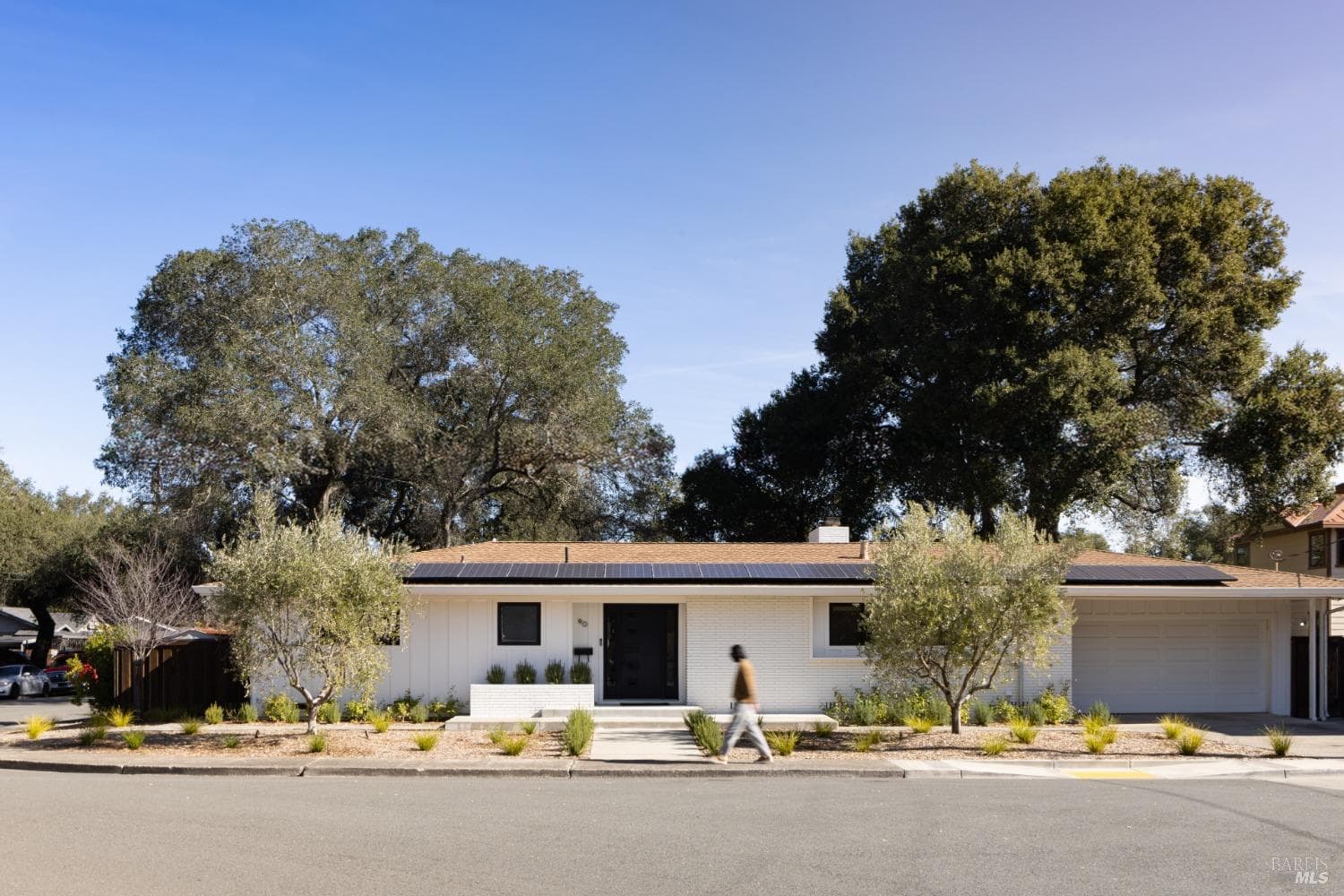


California Zone 0 Rules: A Guide for Napa & Sonoma Homeowners
California's Zone 0 wildfire rules are adopted but not yet law. What they require within five feet of your home, who they cover in Napa and Sonoma, and when.
At a Glance
• Zone 0 is the 5-foot ember-resistant zone around a home's walls, roof, and attached decks
• The Board of Forestry adopted the rules on August 19, 2026, but withdrew them from OAL review on September 8 for technical edits; no statewide effective date yet
• Rules cover all structures in State Responsibility Areas and occupied structures in local Very High Fire Hazard Severity Zones
• Existing homes get a phased timeline: basic upkeep right away, combustible removal in about 3 years, fences and outbuildings in up to 5 years
• Early, documented mitigation helps with AB 38 disclosures, negotiations, and insurance
In Wine Country we measure land in acres and vineyard rows. This season, the measure that may matter most for a home is the smallest one on the property: the first five feet around the house.
California calls this band Zone 0, the "ember-resistant zone." It covers the ground next to a home's walls, under its decks, and below its eaves. The state's rules for it are close to final. If you own in Napa County, Sonoma County, or a hillside part of the Bay Area, look at it now, before it becomes a deadline, a point in a negotiation, or a question from your insurer.
Why the first five feet matter
California's defensible-space law already asks owners to manage vegetation from 5 to 30 feet around a home (Zone 1) and from 30 to 100 feet (Zone 2). Until now, the ground right next to the house had no specific state standard.
That gap matters. Most homes lost to wildfire are not reached by the flames themselves. Wind carries embers ahead of the fire, sometimes a mile or more. They land in bark mulch, dry leaves, a wood fence, or the debris under a deck, and the house catches from there. In 2020, Assembly Bill 3074 directed the Board of Forestry and Fire Protection to write rules for this zone. After several years of drafts, workshops, and public comment, those rules are nearly done.
Where Zone 0 stands as of late September 2026
- August 19, 2026: The Board of Forestry voted 8-0 to adopt the Zone 0 regulations as an emergency rule.
- August 28, 2026: The Board sent the package to the Office of Administrative Law (OAL) for review.
- September 8, 2026: The Board withdrew the filing to make technical edits. It plans to resubmit but has not given a date.
There is no statewide effective date yet. Today, owners are bound by existing defensible-space law (Public Resources Code §4291) and any local ordinance. But the substance of the rules is largely settled, so there is no good reason to wait before you plan. The Board posts updates on its Zone 0 project page.
Who the rules apply to
As adopted, Zone 0 covers two groups of properties:
- State Responsibility Areas (SRA): all buildings and structures, whatever their fire hazard rating.
- Local Responsibility Areas (LRA): occupied structures in locally designated Very High Fire Hazard Severity Zones.
In our area, that is a large footprint. Much of the hillside and rural land in Napa and Sonoma counties is in the SRA, and CAL FIRE's updated hazard maps moved a number of in-town neighborhoods into the Very High category. Hillside homes around Calistoga, St. Helena, and Glen Ellen are typical of the properties most likely to be affected. You can check your parcel on CAL FIRE's Fire Hazard Severity Zone map, or ask us and we will look it up with you.
What Zone 0 requires
Zone 0 runs five feet out from exterior walls, roofs, and attached decks, or to the property line if that is closer. The adopted rules come down to six points:
- No combustible material at the foundation. Replace bark mulch, wood chips, dead leaves, and needles with gravel, stone, pavers, or bare mineral soil.
- Clean roofs, gutters, and undersides. Keep roofs and gutters clear of debris. Remove plants and stored items from under decks and balconies.
- No firewood within five feet. Move the woodpile farther from the house.
- Trees can stay, with upkeep. Remove dead branches, cut back limbs that reach under the eaves, and keep branches at least ten feet from chimneys.
- Noncombustible fencing next to the house. New combustible fences and gates are not allowed in the zone. Where an existing fence attaches to the house, the first five feet of it must be noncombustible.
- Noncombustible small outbuildings. Structures under 120 square feet inside the zone must be built entirely of noncombustible materials.
The final rules are less strict than early drafts. Lawn and low, well-maintained, non-woody plants are allowed in the outer part of Zone 0, past the noncombustible strip closest to the walls.
Compliance timeline once the rules take effect
- New construction: expected to comply from the start.
- Existing homes, immediately: the duties already in prior law, such as clearing roofs and gutters, moving firewood, and removing dead branches.
- Existing homes, within about three years: removing combustible materials and ladder fuels from the zone.
- Existing homes, within up to five years: the larger projects, such as replacing combustible fences and gates, clearing under-deck areas, and retrofitting small accessory structures.
Local fire agencies in LRAs can adopt their own ordinances if those give substantially similar protection, and the local authority has the final word. Many Wine Country properties have oaks and other protected trees, so talk to that authority before you start any tree work. The Sonoma Valley Fire District has published a useful homeowner summary.
What Zone 0 means for sellers, buyers, and insurance
Zone 0 arrives in a market where buyers, lenders, and insurers already ask harder questions about wildfire risk.
For sellers
Under AB 38, many homes in High and Very High hazard zones already need documentation of defensible-space compliance at the point of sale. Sellers who assess their home early, fix what they can, and keep records of the work usually see shorter negotiations and fewer requests for concessions. One caution: if you commission a wildfire assessment, expect to disclose its findings as material facts. Our sellers' guide covers the rest of the preparation process, and our note on preparing a St. Helena home for sale goes into local detail.
For buyers
The standard California purchase agreement has no fire insurance contingency, so do your diligence before you make an offer. Government compliance inspections also cannot take place during a transaction. Only the homeowner can request one. Unless the seller already has certification, compliance becomes your job after closing. Get an estimate of that work and include it in your price. Our buyers' guide covers due diligence in Napa and Sonoma in more depth.
For insurance
This is where preparation pays off most directly. The California Department of Insurance's Safer from Wildfires framework recognizes ember-resistant measures, and documented mitigation gives you a stronger position with carriers, brokers, and the FAIR Plan. No single step guarantees coverage. For background, read our overview of the California home insurance market and our guide to the homeowners insurance crisis in Napa Valley.
Where to start an assessment
A good first step is the Wildfire Disclosure Report from FortressFire, developed with the California Association of REALTORS®. It uses aerial imagery and fire-behavior modeling to assess a specific property and list mitigations. Most natural hazard disclosure providers can order it. For higher-risk properties, an onsite inspection by professionals with wildfire-agency backgrounds gives you an itemized list of the work and what it will cost. Neither replaces a certified inspection by your local fire authority, but both tell you where you stand.
Designing Zone 0 so it still looks right
On paper, Zone 0 reads like a list of things to take away: less mulch, fewer shrubs, a harder edge at the foundation. In practice it does not have to look that way. The Mediterranean landscapes behind much of Wine Country's architecture already use stone terraces, gravel courtyards, and sparse planting near the house. Decomposed granite under a pergola, a band of river stone along a limestone wall, a steel or masonry section where a garden fence meets the house: done well, these look intentional, not imposed. Our piece on sustainable luxury homes in Wine Country covers more of this approach.
We expect the homes that hold their value best to be the ones whose owners did this work early and treated it as part of caring for the property.
Talk to us about your property
If you own in Napa, Sonoma, or a Bay Area hillside neighborhood, or you are thinking about buying, we can help you find out where your property sits, what Zone 0 will likely require, and how to plan the work. Contact The Goodrich Group to start that conversation.
Arthur, The Goodrich Group
_This article reflects the status of California's Zone 0 regulations as of September 29, 2026, and is for general information only. The rules are pending final review and may change. It is not legal, insurance, or fire-safety advice. Consult your local fire authority and qualified professionals about your specific property._
Frequently Asked Questions
Disclaimer: The Goodrich Group and Arthur Goodrich operate as independent real estate professionals. We are not affiliated with, sponsored by, or authorized representatives of any of the developers, resorts, hotels, or entities that may be mentioned in this blog. All information provided is for informational purposes only and is based on publicly available sources, including planning documents, news reports, and other materials in the public domain. While we strive for accuracy, we cannot guarantee that all details are current or complete. Any errors brought to our attention will be promptly reviewed and corrected as appropriate.